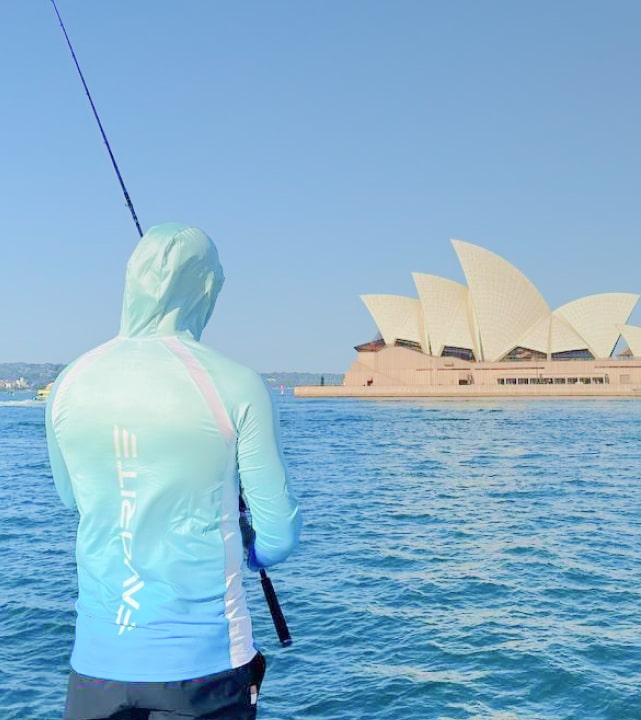
If you walk down a pier in Sydney Harbour, explore the canals of the Gold Coast, or fish the rocky breakwalls of Melbourne, you will notice a quiet revolution happening in Australian fishing. Anglers are ditching their heavy, cumbersome gear and embracing ultra-light tackle to target everyday species. This is the art of Light Rock Fishing (LRF).
Originating in Japan as a highly technical method for catching small reef fish, LRF has exploded in Australia. It’s not just about catching small fish; it’s about downsizing your tackle to maximize the sport, turning a standard Bream or Trevally into an unforgettable, screaming-drag battle.
If you are tired of casting heavy sinkers and waiting for a bite, this guide will introduce you to the fast-paced, highly addictive world of Australian LRF and micro-jigging in 2026.
What Exactly is Light Rock Fishing (LRF)?
At its core, LRF is the practice of using ultra-light spinning gear to cast micro-lures weighing anywhere from 0.5 grams to 5 grams. Unlike traditional bait fishing, LRF is highly active. You are constantly casting, twitching, and retrieving, exploring every inch of structure—from boat hulls and bridge pylons to rock pools and weed beds.
It’s a finesse game. When you use a lure that weighs 2 grams and a line that is as thin as human hair, your margin for error is zero. But the reward is a massive increase in your catch rate. Because you are mimicking the tiniest baitfish, prawns, and marine worms, practically every species in the estuary is a potential target.
Why is LRF Taking Over Australia?
- Ultimate Accessibility: You don’t need a $50,000 boat to succeed in LRF. The best fishing grounds are often right under your feet—ferry wharves, rock walls, and urban canals.
- High Action: Heavy tackle fishing often involves long periods of waiting. With LRF, you are constantly engaged, and because you are targeting smaller, abundant species, the action is non-stop.
- The “Giant” Factor: Hooking a 40cm Bream on a heavy snapper rod is a quick fight. Hooking that same Bream on a 1kg rod with a 3lb line feels like fighting a Marlin. It requires supreme drag management and rod control.
The Target Species: What Can You Catch?
While the Japanese target Rockfish and Aji (Horse Mackerel), the Australian LRF scene has its own iconic species:
- Yellowfin & Black Bream: The undisputed kings of Australian LRF. They inhabit almost every estuary and harbor, aggressively attacking micro-plastics and tiny hardbodies.
- Silver Trevally: Often found schooling around piers and jetties. Hooking a Trevally on LRF gear guarantees a blistering, drag-smoking run.
- Pinkie Snapper: Juvenile Snapper are voracious feeders in bays like Port Phillip and Sydney Harbour.
- Flathead: Even though they grow large, Flathead will happily inhale a 2-inch micro-plastic bounced slowly across the sand.
- Squid (Bycatch): Don’t be surprised if a small calamari grabs your sinking micro-jig!
The LRF Arsenal: Lures and Jig Heads
You cannot use standard lures for LRF. Everything must be scaled down. The presentation must look natural and sink at a perfectly slow rate.
| Water Depth / Flow | Ideal Jig Head Weight | Best Lure Type | Target Zone |
|---|---|---|---|
| Ultra Shallow (0.5m – 1.5m) | 0.5g – 1.0g (Hidden weight) | 1.5″ – 2″ Creature baits, imitation crabs | Oyster racks, very shallow sand flats |
| Mid-Water (1.5m – 3m) | 1.5g – 2.5g | 2″ Paddle tails, curl-tail grubs | Pontoons, boat hulls, retaining walls |
| Deep / Fast Current (3m+) | 3.0g – 5.0g | Micro metal jigs, 2.5″ Minnows | Deep channel edges, bridge pylons |
The Gear: Uncompromising Sensitivity is Mandatory
This is where LRF separates the casual anglers from the dedicated enthusiasts. You simply cannot do this with a standard, cheap fiberglass rod. If you use a heavy, numb rod, you will not be able to cast a 1.5g lure, and worse, you won’t feel the microscopic “tap” of a Bream inhaling your plastic.
You need a specialized, highly technical carbon-fiber blank. Here is how to build the ultimate Australian LRF setup.
The Premium LRF Weapon: Favorite Black Swan
In LRF, sensitivity is your greatest asset. You need to feel the difference between your lure hitting mud, sand, or a rock, and you need to feel a fish breathing on your bait. The Favorite Black Swan is widely regarded as an ultra-light masterpiece designed specifically for this style of fishing.
Weighing practically nothing, it is built on elite Toray Carbon and features high-end Titanium guides. Titanium is significantly lighter than stainless steel, which eliminates “tip bounce” after a cast and allows the blank to transmit vibrations instantly to your hand. If you want to take Bream tournament fishing or urban LRF seriously, the Black Swan is the ultimate investment in your craft.
👉 Discover the Premium Favorite Black Swan Range
The Budget-Friendly Entry: Favorite X1 (Light Models)
If you want to dip your toes into the world of LRF without breaking the bank, look at the ultra-light models in the Favorite X1 lineup (such as the 1-3kg ratings). While it doesn’t have the elite titanium hardware of the Black Swan, its Skyflex 30T carbon blank still offers fantastic responsiveness for casting light plastics around your local estuary, making it an unbeatable starting point under $200.
👉 Explore the Favorite X1 Rods
Reels and Line Setup: The Micro Matrix
Your reel and line must perfectly match your ultra-light rod to maintain balance.
- The Reel: You need a 1000 or 2000 size spinning reel. Anything larger will make the rod feel incredibly heavy and throw off the delicate balance required for micro-twitching. A smooth drag is non-negotiable—when a big fish surges on a 3lb line, a sticky drag will result in an instant snap.
(Upgrade your setup: Browse our premium spinning reels) - The Mainline (PE Braid): Standard 10lb braid is entirely too thick for LRF; it creates too much water resistance and kills the action of a 1g lure. You need ultra-thin, high-grade PE braid. Aim for PE 0.2 to PE 0.4 (which roughly translates to 3lb – 5lb breaking strain).
- The Leader: Always tie 1 to 2 meters of high-quality Fluorocarbon leader. Fluorocarbon is virtually invisible underwater and has excellent abrasion resistance against rocks and pylons. Use 3lb to 5lb leader for clear water Bream, stepping up to 8lb only if you are fishing heavy structure.
Two Essential LRF Techniques to Master
You have the Black Swan rigged with a 1.5g plastic. What next? Try these two proven Australian LRF techniques:
- The Slow Roll (Mid-Water): Cast your micro-plastic alongside a boat hull or pontoon. Let it sink to the desired depth, then simply wind the reel handle at a painfully slow, steady pace. This mimics a cruising baitfish and is deadly for Trevally, Pinkies, and tailor.
- The Bottom Hop (Structure & Sand): Cast out and let the lure hit the bottom (watch your line go slack). Give the rod tip two sharp, tiny flicks upwards, then let it sink back to the bottom. Keep your line tight on the drop! 90% of Bream and Flathead strikes happen as the lure is falling back to the sand.
Frequently Asked Questions (FAQ)
What is the best knot for LRF?
Because you are joining incredibly thin braid (PE 0.3) to thin fluorocarbon (4lb), bulky knots will get stuck in the micro-guides of your rod. The FG Knot is the slimmest and strongest, but a well-tied Double Uni Knot (with 8-10 wraps on the braid side) works perfectly for beginners.
Can I use LRF gear in freshwater?
Absolutely! The exact same LRF setup (especially the Favorite Black Swan) is the ultimate weapon for targeting Trout in mountain streams or catching Redfin and Australian Bass in freshwater dams.
Do I need a landing net for LRF?
Yes. Because you are using ultra-light 3lb to 5lb line, you cannot “deadlift” a fish out of the water onto a pier. Attempting to lift a 600g Bream with your rod will snap your ultra-light tip. Always carry a long-handled, fine-mesh landing net.