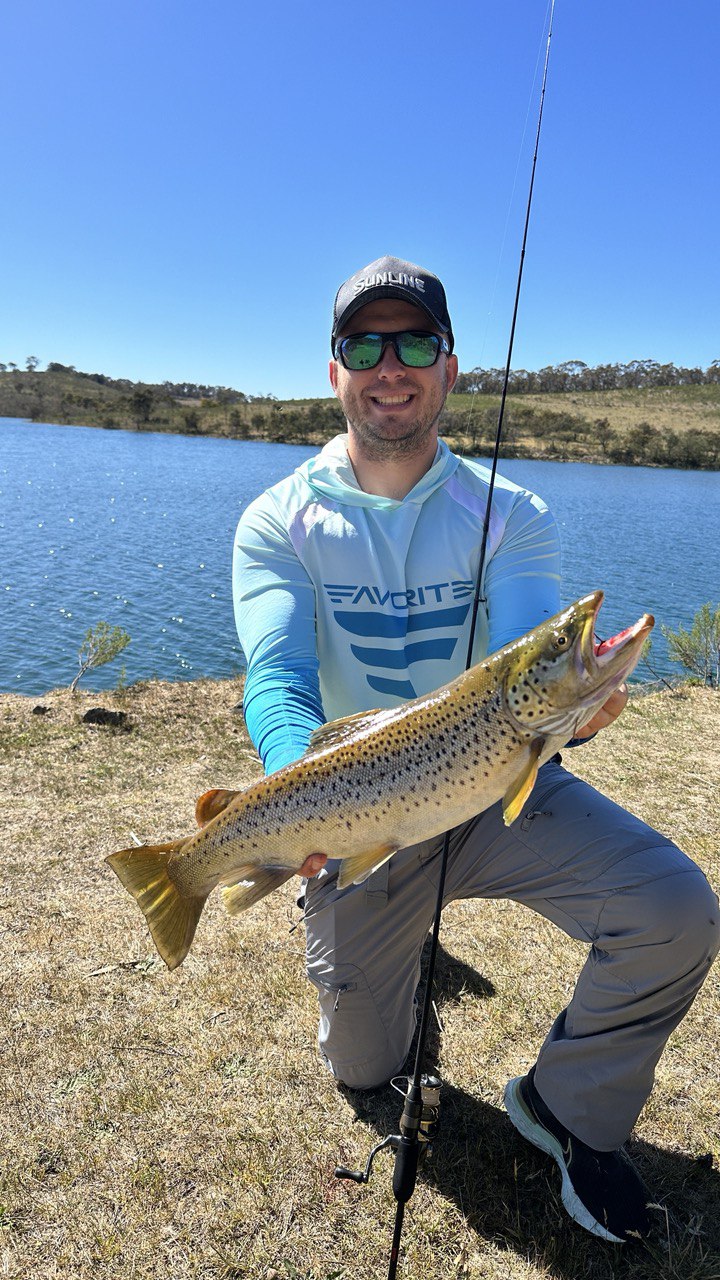
Trout fishing in Australia is more than just a pastime; it is an obsession that drives anglers into some of the most breathtaking and rugged environments on the continent. From the mist-covered, freezing streams of the Snowy Mountains in New South Wales to the pristine, world-class highland lakes of Tasmania and the freestone rivers of Victoria’s High Country, the challenge remains the same: outsmarting one of the most cautious, visually acute, and hyper-aware predators in freshwater. In 2026, the standard for success has fundamentally shifted. As our river systems face increasing fishing pressure and wild fish become more “lure-shy,” the advantage belongs exclusively to those who utilize the extreme sensitivity, stealth, and technical precision of high-modulus carbon technology.
In this monumentally comprehensive, definitive masterclass, we are dissecting every single element of the modern Australian trout scene. We will explore the specific behavioral patterns of wild Brown and Rainbow trout in our unique river systems, dive deep into the hydrodynamics of micro-lure presentation, break down seasonal Australian insect hatches, and explain exactly why the Favorite Black Swan and Favorite Totem have emerged as the absolute premier choices for elite ultra-light (UL) enthusiasts across the country. If you are looking to elevate your trout game from amateur to expert, this is the only resource you need.
The Australian Trout Landscape: A Unique Finesse Challenge
Australia offers a trout fishing experience that differs significantly from the chalk streams of Europe or the massive rivers of North America. Our river systems, such as the Goulburn in Victoria, the Thredbo in NSW, and the Tyenna in Tasmania, often feature highly variable seasonal flows, extremely clear water, and dense overhanging eucalyptus vegetation. In these conditions, a wild Brown Trout can see an angler from ten meters away and can detect the slightest unnatural vibration from a heavy, clunky fishing rod or a poorly tied knot.
Brute force does not work here; finesse is the only way forward. Whether you are “stalking” the steep banks of a tiny, overgrown creek in the Blue Mountains or drifting ultra-light lures through the deep, swirling pools of the Derwent River, your gear must act as a seamless extension of your own nervous system. This is where the distinction between “standard” recreational gear and “elite” tournament-grade gear becomes painfully clear. A high-quality carbon blank doesn’t just help you cast; it allows you to literally “read” the underwater topography through your fingertips.
Materials Science: The 46T Toray Carbon Advantage
In the highly specialized world of ultra-light fishing, physical weight is the absolute enemy of sensitivity. Every extra gram of fiberglass, cheap carbon, or excess epoxy resin in a rod blank acts as a sound dampener. It absorbs the tiny, micro-frequencies created by a trout cautiously “plucking” at a lure, meaning you feel nothing until it’s too late.
The Nano-Carbon Revolution: Why Modulus Matters
The Favorite Black Swan represents a paradigm shift for the Australian market because it utilizes an uncompromising blend of 40T and ultra-rare 46T Japanese Toray carbon. To put this into perspective, most “high-end” rods found in big-box Australian retailers rarely exceed a 30T modulus. The 46T carbon fiber is incredibly dense, staggeringly stiff, and highly resonant. This allows the rod to be manufactured with razor-thin walls and almost zero excess resin.
The result is a rod that is virtually weightless in the hand (often weighing less than 70 grams) but possesses the structural integrity and backbone to turn the head of an angry 5lb wild Brown Trout in a fast-flowing rapid. When a trout even breathes on your lure, the 46T carbon vibrates at a high frequency, transmitting an “electric” shock directly to your hand through the skeletal, ergonomic reel seat.
Fuji Torzite Guides and Freezing Conditions
In the Snowy Mountains or the Tasmanian highlands, early morning temperatures often drop below zero. Ice buildup on rod guides is a nightmare that shreds thin braided line. The Black Swan utilizes Fuji Titanium frames with Torzite inserts. Torzite is significantly thinner, lighter, and possesses a higher thermal conductivity than standard SiC (Silicon Carbide). This ultra-smooth surface reduces line friction to practically zero, preventing ice buildup, eliminating line wear, and allowing micro-lures (like 1/32oz plastics) to be cast up to 20% further.
Strategic Review: Choosing Your Finesse Weapon
1. Favorite Black Swan: The Ultimate Micro-Lure Instrument
For the absolute purist who targets Trout strictly with micro-jigs, tiny unweighted soft plastics (nymph imitations), or micro-spoons, the Black Swan is without equal. In Australia’s smaller streams, where you need to make surgical, silent casts under overhanging wattle trees, the Black Swan’s extra-fast action and incredible tip recovery speed allow for pinpoint, laser-like accuracy.
The Australian Edge: In systems where the water is gin-clear, you are often forced to use 2lb or 3lb fluorocarbon leaders to avoid spooking the fish. The Black Swan’s tip is perfectly calibrated—soft enough to act as a shock absorber to protect these hair-thin lines when a fish thrashes, but fast enough to drive a fine-gauge hook home instantly on the strike.
👉 Explore the Elite Favorite Black Swan Ultra-Light Series
2. Favorite Totem: The Tactical Hardbody Enforcer
If your trout fishing involves a dynamic mix of sinking hardbody minnows, bladed inline spinners, and topwater lures, the Favorite Totem is your ultimate tactical tool. The Totem features a slightly more versatile, robust taper wrapped in advanced Skyflex carbon technology. This makes it the perfect choice for the aggressive “twitching” and “jerking” styles required to trigger violent reaction strikes from highly territorial Rainbow Trout.
The Australian Edge: When fishing larger, wind-swept systems like Lake Eucumbene or Great Lake during the pre-spawn run, you often need to punch a heavier minnow into a stiff headwind. The Totem’s blank provides a “crisp,” authoritative feel that cuts through the wind beautifully, offering the power to manipulate larger lures without sacrificing that crucial elite-level sensitivity.
👉 Discover the Versatility of the Favorite Totem
Advanced Australian Entomology: Match the Hatch with Plastics
Fly fishermen have always understood the importance of insects, but in 2026, the elite lure angler must also “match the hatch” using modern soft plastics and ultra-light hardbodies.
- The Mudeye (Dragonfly Nymph): The staple diet of big Australian lake trout, especially in Victoria and NSW. Use a dark brown or olive 1.5-inch creature bait on the Black Swan. Cast it near drowned timber and let it sink agonizingly slowly.
- The Grasshopper (Summer Terrestrials): In high summer, hoppers blow into the rivers from surrounding farmlands. A small floating hardbody or surface crawler twitched aggressively with the Totem will trigger spectacular surface explosions from aggressive Browns.
- Galaxias and Smelt: In the lakes, trout hunt these tiny native baitfish. A 2-inch translucent paddle tail or a silver micro-spoon retrieved with a fast, erratic action perfectly mimics a fleeing Galaxias.
Tactical Deep Dive: How to Hunt Australian Rivers
The Upstream Stalking Approach
The golden rule of Australian river trout fishing: always fish upstream. Trout constantly face into the current, hovering and waiting for the river to deliver food to their lane. By approaching from behind (downstream), you stay entirely out of their field of vision.
The Technique: Use your Favorite rod to flick a small lure into the turbulent “bubbles” at the head of a pool. Keep your rod tip high to keep the line off the water, and wind just fast enough to maintain contact with the lure as the current brings it back toward you. If the line stops or ticks, strike instantly.
Advanced Casting: The “Bow and Arrow” Cast
Many of Australia’s most productive trout streams are heavily overgrown with blackberry bushes and tea trees, making a standard overhead cast impossible.
The Technique: Hold the lure by the bend of the hook (carefully) in one hand, pull it back to load the ultra-responsive tip of the Black Swan or Totem, aim like you are holding a bow, and release the lure while simultaneously letting go of the line. The high-modulus carbon will shoot the lure low and parallel to the water, deep into the shadows where the monster trout hide.
Reading the “Dead Zones” and “Seams”
Trout are lazy; they hate fighting the main current. They sit in “dead zones”—small pockets of slow-moving water located directly behind large boulders, under undercut banks, or in front of submerged logs. Here, they can effortlessly watch the fast current (the “conveyor belt”) for drifting food. You must land your lure exactly on the “seam” where the fast water meets the slow water. The fast recovery of the Totem ensures your cast doesn’t “over-swing,” providing the mechanical precision needed to hit these 10-centimeter targets consistently.
The Elite Finesse Setup: Lines, Leaders, and Connections
You can hold the finest Toray carbon rod on the planet, but if your terminal tackle is thick, highly visible, or poorly tied, you will fail spectacularly in Australian trout waters. Stealth is your primary weapon.
- Main Line: You must use a high-quality, ultra-thin 8-strand PE braid. Aim for PE 0.2 to PE 0.4. This thread-like diameter slices through the water column, eliminating “line drag” in the current and allowing your micro-lure to sink naturally.
- The Leader: 100% Japanese Fluorocarbon is absolutely mandatory. Braid is highly visible in clear water. For small, clear mountain streams, 3lb or 4lb is the gold standard. If you are fishing large lakes with the potential for an 8lb trophy fish, step up to a maximum of 6lb.
- The Connection: Bulky knots will catch on your micro-guides, ruining your cast and potentially snapping your rod tip. The FG knot is the undisputed king of braid-to-leader connections. It is incredibly strong and weaves the braid around the leader, creating a profile slim enough to pass silently through the Torzite guides of a Black Swan.
Seasonal Strategies for Australian Trout
Trout behavior changes drastically with the Australian seasons. You must adapt your approach:
- Spring (September – November): The water is high and cold from snowmelt. Fish are hungry after winter. Focus on the slower edges of rivers and use slightly heavier, brighter lures (pink or chartreuse) to grab their attention in the milky water.
- Summer (December – February): Water levels drop and temperatures rise. Trout become highly stressed in warm water. Fish only at first light or last light. Focus on highly aerated water (rapids and waterfalls) and use terrestrial imitations like hoppers or beetles.
- Autumn (March – May): The pre-spawn feeding frenzy. This is the time to catch a trophy. Brown trout become highly aggressive and territorial. Use the Favorite Totem to aggressively twitch larger, natural-colored hardbodies to trigger reaction strikes from big males defending their territory.
Comprehensive FAQ: Mastering the Trout Waters
When is the official trout season in Australia?
In most states (like NSW and Victoria), the river season typically opens on the October long weekend and closes after the Queen’s Birthday long weekend in June to protect spawning fish. However, many lakes (like Eucumbene and Jindabyne) remain open year-round. Always check the specific DPI regulations for your state before fishing.
Which rod is ultimately better for me: Black Swan or Totem?
It comes down entirely to your preferred lure presentation. If you are a finesse addict who primarily uses unweighted soft plastics, micro-jigs, and tiny spoons, the Black Swan is the ultimate choice due to its unparalleled sensitivity. If you prefer casting larger hardbody minnows, aggressive twitching, and using inline spinners, the Totem offers the backbone and “snap” needed for those dynamic techniques.
Do I really need a specialized landing net?
Yes, 100%. Trout have a delicate protective slime coating and incredibly soft mouths. A knotless, silicon-mesh landing net is absolutely essential for “catch and release” practices to ensure the fish survives the encounter. Lifting a trout by the line, letting it flop on dry rocks, or handling it with dry hands will almost certainly result in the fish dying after release.
Why are wild river trout so much harder to catch than stocked lake trout?
Wild trout that have grown up in a river system have highly tuned survival instincts. They have incredible eyesight and are hyper-aware of predators (birds, snakes, and humans). They will inspect a lure closely and reject it instantly if the presentation, drift, or vibration feels unnatural. This is exactly why using a high-performance, highly resonant rod like a Favorite is non-negotiable—it allows for the flawless, natural presentation that wild fish demand.
Conclusion: Elevate Your Pursuits
Trout fishing in Australia is a beautiful, deeply technical, and frequently humbling pursuit. It severely punishes sloppy technique and heavily rewards those who pay meticulous attention to the details—the temperature of the water, the specific hatch of the insects, the micro-currents in the river, and the uncompromising quality of their equipment. By stepping away from average gear and entering the world of elite carbon technology with the Favorite Black Swan or the Favorite Totem, you are not just purchasing a fishing rod; you are investing in a deeper, more profound connection to the water.
Experience the unmatched thrill of a 46T carbon blank loading up perfectly as a wild, heavily-spotted Brown Trout clears the water in a spectacular, gill-rattling jump. Feel every microscopic vibration, master every difficult cast, and join the exclusive ranks of Australia’s elite ultra-light anglers. The highland rivers are calling, the hatch is on, and your perfect setup is waiting.
Ready to hunt the highlands and master the streams? Browse our specialized Premium Trout & Ultra-Light collection here and secure your ultimate weapon.