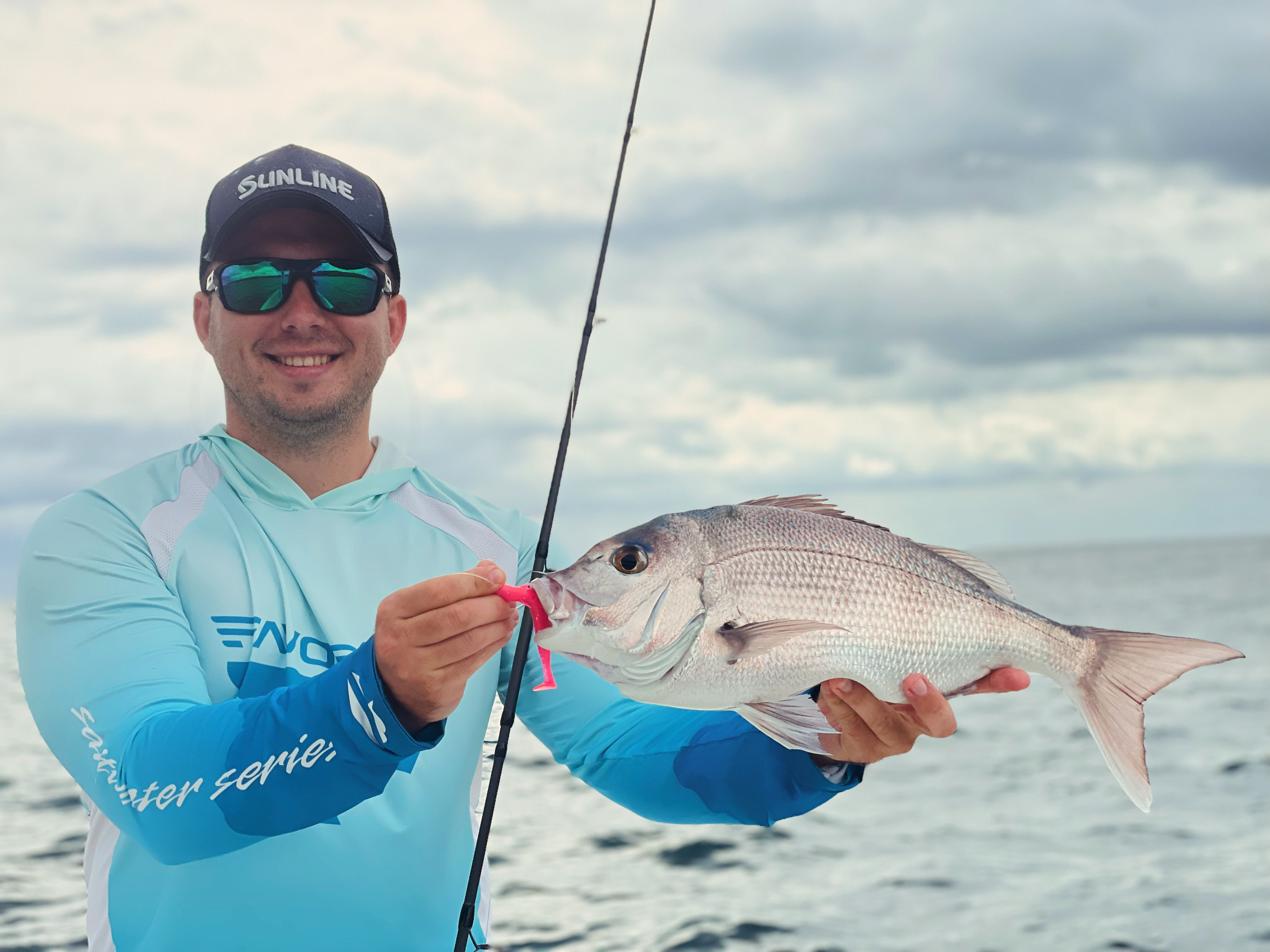
For many Australian saltwater anglers, the transition from soaking pilchards to casting artificial lures starts with one iconic fish: the Snapper. Whether you are chasing pan-sized “Pinkies” in Port Phillip Bay, working the shallow reefs around Sydney Harbour, or dropping heavy plastics offshore in South Australia, Snapper on artificials is a visual and tactile thrill.
Gone are the days when you needed heavy, cumbersome fiberglass rods and a bucket of smelly bait to catch a feed of big Reds. In 2026, the modern approach is all about finesse, technology, and jigging soft plastics. It allows you to cover more water, specifically target larger fish, and experience the famous, aggressive Snapper head-shakes on light, sensitive tackle.
If you want to upgrade your saltwater game, this complete guide will break down the techniques, the best soft plastics, and the high-performance rod setups required to consistently land Snapper on lures.
Understanding the Snapper Bite
Unlike Flathead, which lie on the bottom waiting for prey to swim past, Snapper are active foragers. They cruise over reefs, gravel patches, and mud flats looking for crabs, squid, and smaller fish. However, they are also highly opportunistic.
When a soft plastic is cast out and allowed to sink naturally through the water column, it perfectly mimics a stunned or dying baitfish. Over 80% of Snapper strikes occur on “the drop”—while the lure is sinking. You won’t feel a massive smash; instead, you will see your line suddenly accelerate, or feel a sharp “tick” transmitted through the rod blank. If you aren’t paying attention during the sink, you will miss the fish.
The Technique: “Cast, Sink, and Flutter”
Fishing for Snapper with soft plastics is heavily reliant on your boat positioning and casting direction.
- Fish the Drift: Snapper are easily spooked by engine noise. The best method is to cut your engine upwind of your target reef or GPS mark and silently drift over it.
- Cast Ahead of the Drift: Cast your soft plastic as far as you can in the direction you are drifting. This allows the lure to sink naturally to the bottom without the boat pulling it away.
- Manage the Slack: Leave the bail arm open until the lure hits the bottom, but watch your braided line floating on the surface like a hawk. If the line suddenly darts forward or stops sinking prematurely—strike! A Snapper has grabbed it mid-water.
- The Retrieve: Once on the bottom, give the rod two sharp upward lifts, then let the lure flutter back down. Repeat this until the lure is directly under the boat, then reel in and cast again.
Choosing the Right Soft Plastics and Jigheads
Snapper have powerful jaws designed for crushing shells, so your hooks need to be razor-sharp and strong.
| Water Depth | Ideal Jighead Weight | Hook Size | Best Soft Plastic Type |
|---|---|---|---|
| Shallow Reefs (2m – 6m) | 1/8 oz – 1/4 oz | 2/0, 3/0 | 4″ to 5″ Jerk shads, 100mm Squid imitations |
| Mid-Depth Bays (6m – 15m) | 1/4 oz – 3/8 oz | 3/0, 4/0 | 5″ to 7″ Jerk shads, large Curl tails |
| Deep Offshore (15m+) | 1/2 oz – 1 oz+ | 5/0, 6/0 | 7″ Jerk shads, heavy vibration vibes |
Pro Tip: Jerk shads in nuclear chicken, motor oil, and bright pink colors are historically proven Snapper slayers in Australian waters.
The Gear: Why Sensitivity is Your Best Weapon
You need a specific type of rod for this style of fishing. It must be light enough to comfortably cast repeatedly, sensitive enough to feel a bite on the drop in 10 meters of water, yet possess a devastatingly strong butt section to turn the head of a 5kg “Knobby” Snapper heading for the reef.
The Everyday Workhorse: Favorite X1
For standard bay fishing, where you are dealing with Pinkies and the occasional large adult, the Favorite X1 is an exceptional choice. It retains the fast action needed to actively work the plastic, but has enough carbon wrapping in the lower half to ensure you don’t get bossed around by a big fish. It is rugged, reliable, and perfectly suited for dropping heavier jigheads into deeper channels.
👉 Check out the Favorite X1 Series
The Premium Finesse Weapon: Favorite Black Swan
When fishing shallow, crystal-clear water where Snapper are highly boat-shy, you often need to downsize to ultra-light jigheads. This is where the Favorite Black Swan shines. Built as a masterpiece of rod engineering, its ultra-high modulus carbon blank offers unmatched, telegraph-like sensitivity. It allows you to feel the faintest “tick” of a Snapper inhaling your plastic on the drop, long before the line even twitches. If you want the absolute pinnacle of tactile feedback and lightweight performance, the Black Swan is the ultimate tool.
👉 Experience the Perfection of the Favorite Black Swan
Reel and Line Setup
Pair your rod with a robust 3000 to 4000 size spinning reel featuring a smooth, sealed drag system to handle saltwater environments and long, screaming runs.
(Find the perfect match in our spinning reels category)
Use 15lb to 20lb high-vis PE Braid. High-visibility braid (like bright green or orange) makes it much easier to detect bites while the lure is sinking. Connect this to two meters of 20lb to 30lb Fluorocarbon leader to provide abrasion resistance against reef structures and the Snapper’s sharp teeth.
Frequently Asked Questions (FAQ)
Do I need to anchor or drift?
When using soft plastics, drifting is almost always better. It allows you to cover vast areas of reef or mudflats to actively “hunt” the fish, rather than waiting for the fish to come to you via a berley trail.
Is scent important for Snapper?
Yes! Snapper have an excellent sense of smell. Applying a sticky gel scent (garlic, pilchard, or squid flavor) to your soft plastic will often turn a subtle inquiry into a full-blown aggressive strike.