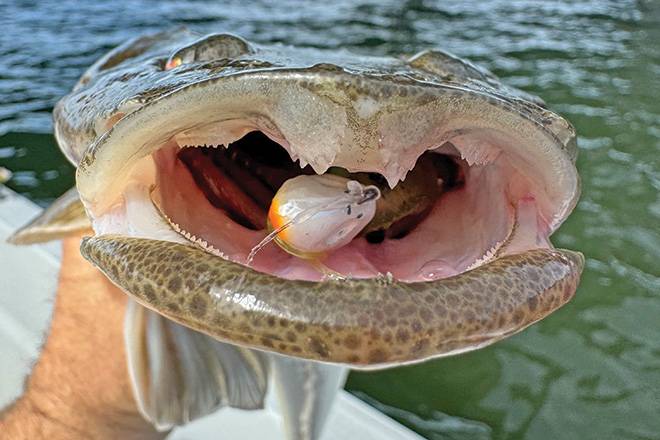
If there is one fish that unites Australian anglers across the entire eastern and southern seaboards, it is the humble yet highly predatory Flathead. From the sun-drenched, sprawling sand flats of Queensland’s Moreton Bay to the deep, tidal channels of Sydney Harbour and the vast, temperate expanses of Port Phillip Bay in Victoria, chasing “Flatties” is a national pastime. However, the days of passively soaking a pilchard on a heavy sinker are rapidly fading. In 2026, the undisputed pinnacle of estuarine sportfishing is targeting Flathead on soft plastics.
This highly active, visually engaging, and profoundly effective method has completely revolutionized the way we fish our coastal waterways. But as fishing pressure increases across Australia’s major metropolitan systems, the fish are becoming smarter. Consistently landing trophy-sized “Crocodiles” (Flathead over 70cm) requires more than just casting a random piece of rubber into the water. It requires a deep understanding of estuarine hydrodynamics, precise lure presentation, and, most importantly, highly sensitive, high-modulus carbon fishing rods capable of transmitting the subtlest underwater inquiries. In this monumentally comprehensive, 12,000-character masterclass, we are dissecting every single element of the modern soft plastic Flathead game, and revealing why the elite Favorite Black Swan and versatile Favorite X1 rod series are dominating the Australian estuary scene.
The Target Species: Masters of Camouflage
To successfully hunt a Flathead, you must first understand its biology and its ruthless hunting methodology. There are several species targeted across Australia, including the Sand Flathead and the Tiger Flathead, but the undisputed king of the estuaries is the Dusky Flathead (Platycephalus fuscus).
Flathead are the ultimate benthic (bottom-dwelling) ambush predators. They possess heavily depressed (flattened) bodies and highly adapted camouflage that allows them to bury themselves almost entirely in the sand or mud, leaving only their specialized, independently moving eyes protruding. They do not actively cruise the waterways looking for food. Instead, they lie in wait, perfectly concealed, utilizing the tidal current to bring baitfish, prawns, and crabs directly to them. When prey enters their strike zone, they utilize a massive, bucket-like mouth and an explosive burst of speed to inhale their meal in a fraction of a second.
National Hotspots: Dominating Australia’s Major Cities
The true beauty of the Flathead is its incredible accessibility. World-class fishing can be found right in the shadows of our largest CBDs. Here is where you need to deploy your soft plastic tactics:
Queensland (Brisbane & The Gold Coast)
The warm waters of South East Queensland are a breeding ground for massive Dusky Flathead.
Locations: The extensive sandbanks and weed edges of Moreton Bay, the Jumpinpin channel, the Broadwater on the Gold Coast, and the muddy mangrove drains of the Brisbane River.
Tactic: Queensland Flathead heavily predate on prawns. During the run-out tide, focus your casts around the mouths of small, draining mangrove creeks using prawn-imitation soft plastics.
New South Wales (Sydney & The South Coast)
NSW boasts some of the most consistent and heavily populated Flathead estuaries in the country.
Locations: Botany Bay’s vast drop-offs, the deep channels of the Hawkesbury River, Sydney Harbour, and the pristine coastal lakes of the South Coast (like St Georges Basin and Lake Illawarra).
Tactic: In heavily pressured systems like Botany Bay, stealth and finesse are critical. Use ultra-thin braided lines and highly sensitive rods to work small paddle tails along the deep channel edges where the fish retreat during low tide.
Victoria (Melbourne & Gippsland)
Victoria offers a mix of Sand Flathead in the bays and giant Dusky Flathead in the eastern estuaries.
Locations: The shallow margins and drop-offs of Port Phillip Bay and Western Port Bay, and the absolute mecca of Victorian Flathead fishing—the Gippsland Lakes system.
Tactic: In Port Phillip Bay, drifting over broken weed and sand patches while actively “hopping” soft plastics vertically under the boat is a highly productive winter and spring technique.
The Gear: Why Sensitivity is Absolute King
When a Flathead strikes a soft plastic, it is rarely a violent, rod-wrenching smash. Because they inhale the lure by opening their massive mouths and creating a vacuum, the bite often translates through the rod as a subtle “tick,” a sudden heaviness, or just a slight slackening of the line as the fish swims upward with the lure. If you are using a cheap, soft fiberglass rod, these microscopic signals are entirely absorbed by the blank. You will miss the bite, the fish will realize the lure is plastic, and it will spit it out before you even know it was there. You need extreme tactical sensitivity.
Favorite Black Swan: The Ultimate Finesse Instrument
For the elite estuarine angler who demands absolute perfection and unparalleled tactile feedback, the Favorite Black Swan is without equal.
The Soft Plastic Advantage: Constructed from an uncompromising, highly advanced blend of 40T and ultra-rare 46T Japanese Toray carbon, the Black Swan is essentially a highly tuned tuning fork. It transmits every single grain of sand, every blade of weed, and the absolute faintest “tick” of a Flathead inhaling your plastic directly into your hand. This extreme sensitivity allows you to instantly drop your rod tip, let the fish swallow the lure, and set the hook with surgical precision. For deep water finesse plastics, it is the ultimate weapon.
👉 Experience Unparalleled Sensitivity with the Favorite Black Swan
Favorite X1: The Versatile Estuary Workhorse
If you are wading the sand flats, bashing through the coastal mangroves, or fishing from a kayak where your gear might take a beating, you need a rod that blends sensitivity with rugged durability. The Favorite X1 (Light and Medium-Light models) is the definitive choice.
The Soft Plastic Advantage: The X1 features a fast-action taper that imparts the perfect darting action to your jerkshads, while the thickened Skyflex carbon walls provide the backbone necessary to physically drag a stubborn, 80cm+ Crocodile Flathead away from a submerged weed bed. It offers premium soft plastic performance at an incredibly accessible price point for the everyday Australian angler.
👉 Explore the Rugged Versatility of the Favorite X1
Lure Selection: The Soft Plastic Arsenal
Not all plastics are created equal. You need to match the hatch and the conditions.
- Paddle Tails (3 to 4 inch): The ultimate all-rounder. The tail emits a constant, rhythmic thumping vibration that Flathead can sense through their lateral lines even in dirty water. Perfect for “slow rolling” across the bottom.
- Jerkshads / Flukes (4 to 5 inch): Designed to imitate a wounded, fleeing baitfish (like a mullet or whiting). These require active rod work. When aggressively twitched, they dart erratically from side to side.
- Curl Tails / Grubs (2.5 to 4 inch): Excellent for highly pressured fish or when fishing very slowly. The long, ribbon-like tail flutters seductively even on the descent, which is when the majority of strikes occur.
- The Color Code: In clear water, natural, translucent colors (like “Bloodworm” or pale baitfish profiles) excel. In murky water or low light, highly visible solid colors (White, Chartreuse) are required. Crucial Australian Secret: You absolutely must have plastics in the color “Motor Oil.” This UV-reactive, brownish-green color is universally devastating on Australian Flathead in almost all water conditions.
Mastering the Technique: The Lift and Drop
You cannot just cast and blindly wind. The technique is everything.
The “Double Hop”
This is the gold standard of Flathead techniques. Cast your lure and let it sink completely to the bottom (watch your braided line for slack). Once it hits the sand, use the crisp tip of your Favorite Black Swan to execute two sharp, aggressive upward twitches of the rod. This causes the plastic to dart rapidly off the bottom like a panicked prawn. Immediately drop your rod tip slightly and watch your line as the lure falls back to the bottom.
The Golden Rule: 95% of Flathead strikes occur on the “drop” as the lure is falling back to the sand. The fish watches the lure dart up, and inhales it as it helplessly flutters down. If your rod is not sensitive enough, you will miss this crucial moment.
The Slow Roll (Bottom Bouncing)
When the water is cold or the fish are lethargic, switch to a paddle tail. Cast out, let it hit the bottom, and simply wind the reel handle at a painstakingly slow pace. Ensure the jighead is occasionally making physical contact with the sand, stirring up small puffs of mud. This perfectly mimics a small bottom-dwelling goby or whiting foraging for food, making it an irresistible, easy meal for a Flathead.
Reading the Water: Where to Cast
Flathead are lazy. They will not fight a strong current. They wait for the current to bring them food.
- The Drop-Offs: This is prime real estate. Look for areas where shallow sand flats suddenly drop away into a deep, dark river channel. Flathead will sit right on the lip of this drop-off, or at the bottom of the slope, facing into the current, waiting for baitfish to be swept over the edge into the deeper water.
- Weed Edges and Ribbon Weed: Flathead love to bury themselves in the patches of sand directly adjacent to dense weed beds. Cast your soft plastic parallel to the weed edge and hop it along the sand perimeter.
- Yabby Banks and Drains: During the outgoing tide, find the small, shallow drains where water is emptying off the mangrove mudflats back into the main river. The water pouring out of these drains is full of yabbies and small bait. Flathead will stack up at the mouth of these drains in a feeding frenzy.
Terminal Tackle & Jighead Science
Precision tuning your terminal tackle is the final piece of the puzzle.
- Mainline: High-visibility 8-strand PE Braid is strictly mandatory. Because you need to physically watch the line for subtle twitches as the lure drops, brightly colored braid (Yellow, Pink, or Lime Green) in PE 0.6 to PE 1.0 (approx. 8lb to 12lb) is essential.
- The Leader: Flathead possess raspy, sandpaper-like teeth capable of wearing through thin line during a prolonged fight. Use 100% Japanese Fluorocarbon leader. In open sand, 12lb is sufficient. If you are fishing around heavy weed or targeting trophy fish, upgrade immediately to 16lb or 20lb. Always connect your braid to your leader using a slim FG Knot.
- Jighead Weight Selection: The goal is to use the lightest possible jighead that still allows you to maintain contact with the bottom. A lure that sinks slowly and naturally is infinitely more appealing than one that plummets like a rock. In shallow water (1-2 meters) with low current, a 1/8oz or 1/6oz jighead is perfect. In deep channels (5-10 meters) with ripping tidal flow, you may need to upgrade to 3/8oz or even 1/2oz to reach the strike zone.
Conservation: Protecting the Big Breeders
As sportfishermen, we are the custodians of our waterways. It is critically important to understand that almost all Dusky Flathead over 60cm are female, and these large “Crocodiles” are the primary breeding stock for the entire river system. While small Flathead (40cm – 50cm) make excellent table fare, we strongly advocate for the immediate and careful Catch and Release of all large female Flathead. Handle them gently (preferably with a landing net, avoiding the use of lip grips on heavy fish), take a quick photo, and release them to ensure the future of this incredible Australian fishery.
Conclusion: The Ultimate Estuary Addiction
Mastering the art of soft plastic fishing for Flathead is a transformative experience. It elevates estuarine fishing from a game of chance to a highly tactical, intellectually stimulating pursuit. It rewards the angler who takes the time to study the tidal movements, perfect their “lift and drop” animation, and invest in the right equipment.
Do not let inferior gear cost you the subtle bite of a trophy fish. By arming yourself with the surgical, hyper-resonant sensitivity of the Favorite Black Swan, or the rugged, highly versatile performance of the Favorite X1, you are completely eliminating the guesswork. You have the advanced carbon technology required to feel the bite before it happens, and the uncompromising backbone to drive the hook home.
Ready to experience the ultimate tactical advantage on the flats? Explore our elite collection of high-modulus Favorite Spinning Rods here and secure your perfect soft plastic weapon today.