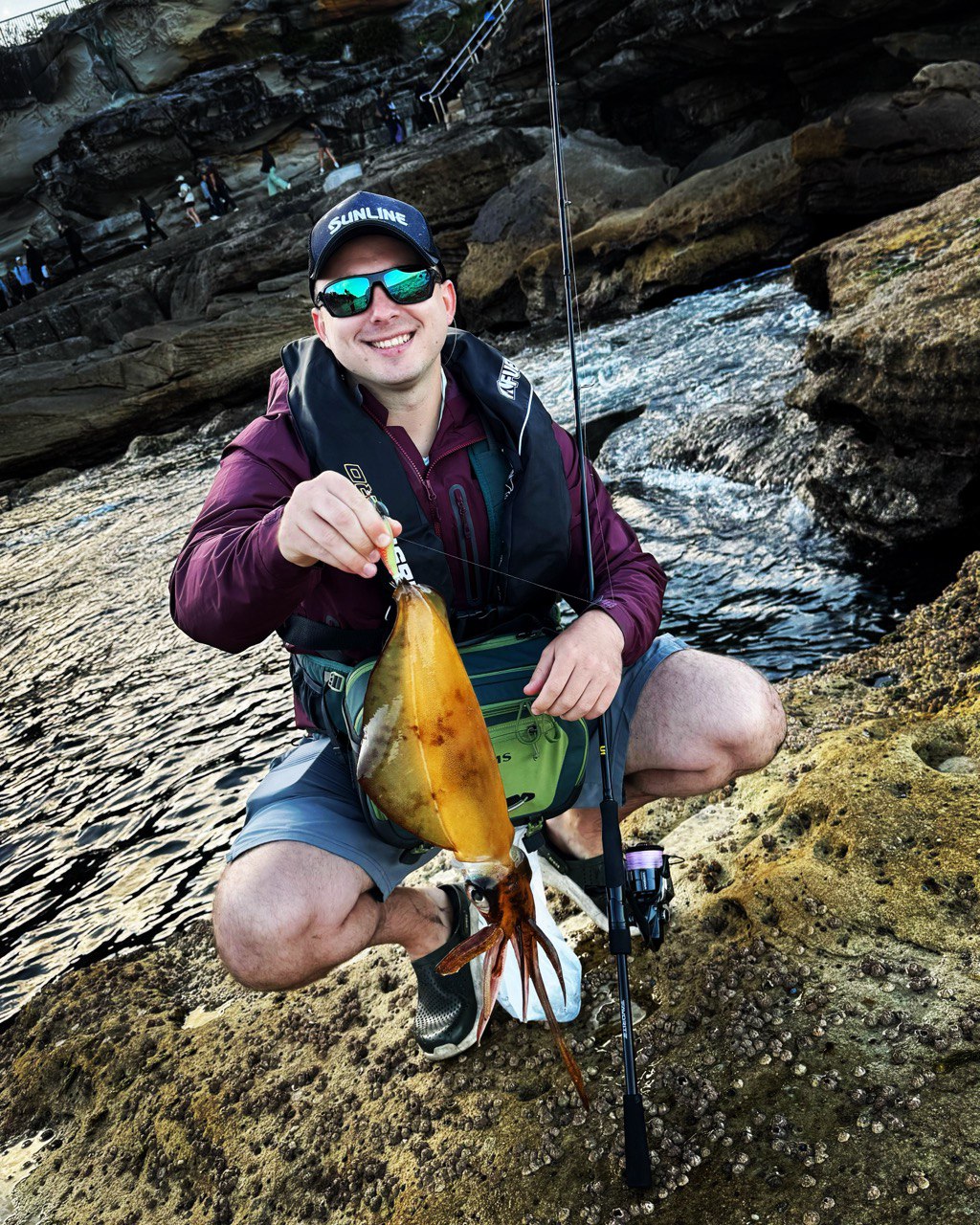
Over the past decade, the Australian sportfishing scene has witnessed a massive, undeniable revolution. What was once considered a simple, passive bait-fishing activity—often just a chore to gather fresh bait for Snapper or Kingfish—has completely transformed into a highly technical, gear-obsessed pursuit. Welcome to the world of modern Egi fishing, the refined Japanese art of hunting squid with specialized artificial lures and highly sensitive tackle.
Targeting the highly prized Southern Calamari (Sepioteuthis australis) and the aggressive Arrow Squid along the southern coastlines of Australia—from the rocky headlands of New South Wales down through the weed beds of Victoria, South Australia, and the pristine waters of Tasmania—requires precision, stealth, and a deep understanding of cephalopod biology. In this ultimate, comprehensive 2026 buyer’s guide and tactical manual, we are breaking down everything you need to know to master Egi fishing. From decoding complex jig colors and executing the perfect retrieve, to selecting the ultimate high-performance Favorite spinning rod to ensure those fragile tentacles stay firmly pinned.
Understanding the Target: Southern Calamari vs. Arrow Squid
To consistently catch trophy-sized squid, you must first understand how they operate and differentiate between the main species.
The Southern Calamari
This is the primary target for most Australian egi anglers. Southern Calamari are highly visual, intelligent ambush predators. They possess incredibly complex eyes, allowing them to hunt effectively in extremely low-light conditions. They do not scavenge; they actively hunt live, moving prey like prawns, pilchards, garfish, and whiting. They are typically found in shallow, coastal waters associated with heavy weed and reef.
The Arrow Squid
Sleeker, faster, and far more aggressive, Arrow Squid are pelagic roamers. They are often encountered in deeper water or around strong artificial light sources at night (like major piers). When Arrow Squid move in, the action is usually fast and frantic, but their table quality is generally considered slightly inferior to the tender Calamari.
The Biological Challenge: A squid attacks its prey using two long, extendable feeding tentacles. Once the prey is secured, it brings it into its powerful beak to paralyze it. Because these two feeding tentacles are relatively fragile and easily torn, applying too much pressure during the fight with a stiff fishing rod will simply rip the tentacles off, losing you the squid. This inescapable biological fact dictates your entire approach to Egi tackle.
The Habitat: Where to Find the Kraken
Squid are highly dependent on specific underwater environments. You will rarely find them wandering aimlessly over barren sand. You need to focus your casting efforts on these prime locations:
1. Seagrass Meadows and Ribbon Weed Beds
This is the absolute prime real estate for Southern Calamari. The thick, waving ribbon weed provides perfect camouflage for the squid to ambush passing baitfish, and it is also where they lay their white, finger-like egg masses. Look for broken ground where patches of dark weed meet bright white sand. Casting your jig over the weed and letting it sink into these sandy “pockets” is a guaranteed strike zone.
2. Kelp-Covered Reef Edges
Rocky headlands plunging into deep, clear ocean water covered in golden kelp are absolute hotspots for monster-sized “hood” Calamari, especially during the winter months when the water temperature drops and the largest breeding squid move inshore.
3. Artificial Light Sources (The Night Shift)
Squid are phototactic—they are strongly drawn to light. Fishing around illuminated piers, jetties, and boat ramps at night is incredibly effective. The artificial light attracts massive schools of small baitfish, which in turn brings the squid out of the darkness and into the illuminated strike zone to feed.
Decoding Egi Jigs: Sizes, Sink Rates, and Color Theory
Walking into an Australian tackle store and looking at the massive wall of squid jigs (Egis) can be intimidating. They come in a bewildering array of colors, sizes, and UV coatings. Here is the professional breakdown to help you choose the right weapon.
Jig Sizes and Sink Rates
Egi sizes do not refer to their exact weight in grams, but rather their length in the traditional Japanese “Sun” measurement system.
- Size 2.5: Sinks slowly (approx. 5-6 seconds per meter). Perfect for shallow weed flats (1-2 meters deep), targeting smaller squid, or when the bite is exceptionally tough and the squid are highly pressured.
- Size 3.0: The versatile all-rounder (sinks approx. 3-4 seconds per meter). Ideal for 3 to 5 meters of water. If you can only buy one size, make it a 3.0.
- Size 3.5: The heavy artillery (sinks approx. 2.5-3 seconds per meter). Used for deep water, fast tidal currents, and targeting trophy winter squid off the rocks.
Color Theory: Foil vs. Cloth
Modern Egi jigs consist of an internal foil body covered by a colored, textured cloth. The combination of these two elements dictates exactly when and where the jig should be used.
- Gold / Silver Foil: The absolute go-to for bright, sunny days and crystal-clear water. It reflects the maximum amount of sunlight, imitating the flash of a fleeing baitfish.
- Red / Purple Foil: The ultimate choice for low-light conditions, heavily overcast days, dawn, dusk, and night fishing. These colors provide a strong, solid silhouette against the surface when the squid is looking up.
- Keimura (UV Glow): Invisible to the naked human eye but highly visible to the complex eyes of a squid. UV jigs are devastatingly effective in deep water or slightly milky/dirty water conditions where normal light struggles to penetrate.
- Natural Cloth Colors: Greens, browns, and blues work best when the water is ultra-clear and the squid are feeding on natural local bait like pilchards, grass whiting, or actual prawns.
- Aggressive Cloth Colors: Bright pinks and oranges (often called “search colors”) are used to quickly draw in aggressive, actively feeding squid from a distance.
The Retrieve Technique: The “Bloop” and the Dart
You cannot simply cast an Egi jig out and wind it straight back in like a metal spinner. The jig is aerodynamically designed to dart aggressively side-to-side on the upward jerk, and then glide down at a perfect 45-degree angle. This perfectly mimics a fleeing and then exhausted prawn or wounded baitfish.
The Execution:
- Make a long cast over the weed bed and leave the bail arm of your reel open. Count the jig down until it is just above the weed (calculate this using the jig’s sink rate formula).
- Engage the reel and rapidly wind up any slack line.
- With your rod tip pointing down towards the water, execute two or three sharp, aggressive upward whips of the rod (this creates the classic Japanese “Bloop” sound as the carbon rod slices the air). This action makes the jig violently dart upwards.
- The Critical Phase: Immediately stop, drop the rod tip slightly, and let the jig fall on a “semi-slack” line. Squid will attack the jig 95% of the time during this falling phase.
- Watch your bright PE braid intently. If the line suddenly shoots forward, goes completely slack prematurely, or you feel a heavy, spongy weight—strike firmly by sweeping the rod!
The Gear: Why Stiff Rods Will Lose You Squid
As mentioned earlier, a squid’s feeding tentacles are incredibly fragile. If you use a heavy, stiff fiberglass boat rod, a Bass baitcaster, or a heavy pelagic spinning rod, two disastrous things will happen: you will not be able to impart the correct, crisp darting action to the jig, and when you hook a squid, the lack of shock absorption will violently rip the small barbless prongs straight out of its flesh during a surge.
A dedicated Egi rod must possess a very specific, complex taper: it needs a relatively crisp, fast-recovering tip to impart the aggressive jerking action to the jig, but it absolutely must have a deeply parabolic, forgiving bend through the mid-section to absorb the heavy, pulsing “jet-propulsion” runs of a hooked calamari.
The Premium Shore-Based Weapon: Favorite Black Swan
When fishing from the ocean rocks or high piers where extremely long casts are mandatory, and detecting the subtle, almost imperceptible touch of a squid in 8 meters of water is critical, the Favorite Black Swan is an absolute revelation.
Built from premium ultra-high modulus Toray carbon, it is shockingly light, allowing you to aggressively jerk heavy 3.5 size jigs for hours without experiencing wrist fatigue. Its highly sensitive blank transmits the faintest “tick” of a squid touching the jig, while the progressive, parabolic bend ensures those delicate tentacles stay firmly pinned all the way to the landing net. It is the pinnacle of squid fishing technology.
👉 Experience the Ultimate Sensitivity of the Favorite Black Swan
The Versatile Boat & Pier Performer: Favorite X1 (Light / Medium-Light)
If you are drifting over the shallow weed beds in a tinny or kayak, or simply looking for an incredibly high-performing rod that won’t break the bank, the Light or Medium-Light models in the Favorite X1 series are the perfect choice.
The X1 delivers a fantastic, forgiving action that expertly absorbs the lunges of a large calamari, preventing pulled hooks. It provides enough backbone to launch a jig into a stiff headwind, yet remains sensitive and versatile enough to double as your primary Flathead or Bream rod when the squid temporarily stop biting.
👉 Discover the Versatility of the Favorite X1
Line, Leader, and Terminal Tackle
Your rod is only as good as the line connecting it to the jig.
- The Mainline: You absolutely must use ultra-thin, high-visibility PE Braid (typically PE 0.6 to PE 0.8). Braid has zero stretch, allowing you to instantly transfer the energy of your rod jerk directly to the lure. It also cuts through the wind and tidal currents much better than thick monofilament, keeping you in direct contact with your jig.
- The Leader: Always use a 100% Fluorocarbon leader (around 8lb to 12lb breaking strain). It is virtually invisible underwater and offers crucial abrasion resistance if your jig brushes against a sharp reef or kelp. Run a leader length of about 1.5 to 2 meters.
- The Connection: Use a specialized Egi snap clip. Never tie your fluorocarbon leader directly to the jig’s eyelet. The clip acts as a hinge, allowing the jig to swing, dart, and flare with complete, unrestricted freedom of movement.
After the Catch: The Ikijime Method
If you intend to eat your catch, caring for it correctly is paramount for the best culinary experience. Australian anglers highly respect the Japanese “Ikijime” method of humanely dispatching the squid instantly. Using an Ikijime spike (or the specialized tool on the back of many Egi brushes), pierce the squid directly between the eyes. You will know you have hit the brain perfectly when the squid instantly turns from a dark, angry red/brown to completely translucent white. This stops stress hormones from ruining the meat and ensures the absolute best flavor and tenderness.
Frequently Asked Questions (FAQ)
What is the best time to catch squid in Australia?
While squid can be caught year-round, the absolute best times are dawn and dusk (the change of light) and during a high tide. The winter months generally produce the largest “trophy” Calamari, while summer offers huge numbers of smaller, aggressive squid.
Do lunar phases affect squid fishing?
Absolutely. A full moon creates high ambient light at night, which illuminates the water column and allows squid to hunt actively all night long. The days leading up to and immediately following a full moon are generally considered prime eging times.
Why do I keep dropping squid during the fight?
You are likely making one of two mistakes: using a rod that is far too stiff (lacking shock absorption), or you are winding in too fast and applying too much drag pressure. Keep a steady, slow wind, let the rod absorb the pulses, and never try to lift a large squid out of the water by the line—always use a landing net.
Conclusion: The Ultimate Reward
Mastering the art of Egi fishing is an incredibly rewarding journey. It transforms a simple, mundane fishing trip into a highly tactical, visual game of chess against one of the ocean’s most fascinating and intelligent creatures. By understanding the environment, reading the tides, matching your jig colors to the precise light conditions, and upgrading to a specialized, forgiving rod like the Favorite Black Swan or X1, you will drastically and permanently increase your catch rate.
Not to mention, fresh, line-caught Southern Calamari is arguably one of the finest seafoods available anywhere in Australian waters. Equip yourself with the right Favorite gear, find the ribbon weed, perfect your “bloop”, and get ready to experience the heavy, pulsing pull of the Kraken.