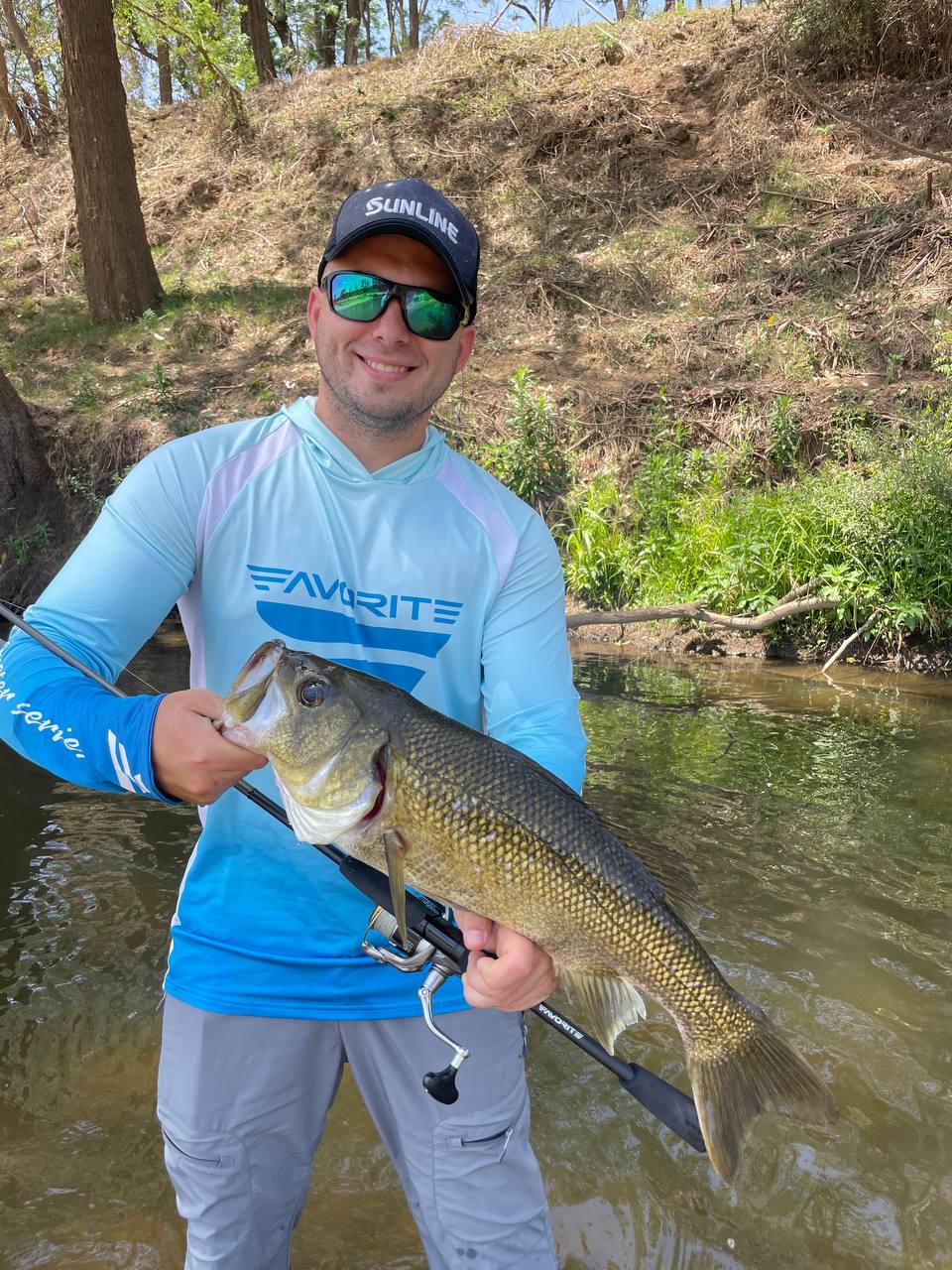
The Australian Bass (Macquaria novemaculeata) is an absolute icon of the country’s eastern drainage systems. Ranging from the dark, tannin-stained creeks of Queensland down to the vast, windswept impoundments of Victoria and New South Wales, pursuing this aggressive predator is an obsession for thousands of Australian anglers. Renowned for its spectacular topwater strikes, its tendency to inhabit the most impenetrable underwater structures, and its disproportionate sheer pulling power, the Australian Bass demands respect. In 2026, catching them consistently requires more than just casting a lure; it requires military-like precision, an intimate understanding of their environment, and uncompromising fishing gear.
In this monumentally comprehensive, definitive masterclass, we are dissecting every single element of the modern Australian Bass scene. We will explore the critical importance of casting accuracy, the heart-stopping thrill of topwater insect imitations, and the brutal reality of extracting a trophy fish from dense submerged timber. Crucially, we will explain why standard, soft fishing rods lead to heartbreak, and why advanced, high-modulus carbon weapons like the Favorite Totem and Favorite X1 are the ultimate tactical choices for dominating this iconic species.
The Battleground: Understanding Bass Habitat
To catch an Australian Bass, you must first understand where they live and how they hunt. Bass are ambush predators. They despise bright sunlight and open, featureless water. They rely on stealth, hiding in the shadows to conserve energy while waiting for the current or a careless mistake to deliver food right to their doorstep.
The “Snags”: Their Fortress
If you are not losing the occasional lure, you are not fishing close enough to the bass. They live in the “snags”—a broad Australian term for any submerged structure. This includes fallen eucalyptus trees, dense root masses, undercut clay banks, submerged boulders, and bridge pylons. A big bass will sit right in the deepest, darkest V-crotch of a submerged branch. Your lure needs to land within mere centimeters of this structure to trigger a strike.
Rivers vs. Impoundments (Dams)
The tactics change drastically depending on the environment:
- Wild Rivers and Creeks: E.g., The Nepean, Hawkesbury, and Clarence Rivers. Here, bass are highly attuned to the current and the shadows cast by overhanging vegetation. Stealth, precise casting, and kayak maneuverability are paramount.
- Impoundments (Dams): E.g., Glenbawn Dam, Lake St Clair. These are massive bodies of water where bass school up in deeper water, suspending off submerged points, weed edges, or following schools of bony bream. Here, electronics (sounders) and heavier vibration baits come into play.
The Gear Dictates the Outcome: Why You Cannot Compromise
The defining characteristic of an Australian Bass strike is the immediate, explosive run back into the safety of their snag. When a 50cm+ bass realizes it has been hooked, it kicks its massive tail paddle and dives for the closest submerged branch. If your rod is too soft (a slow or parabolic action), the rod will simply bend, giving the fish the crucial half-meter of slack line it needs to wrap your leader around a branch and break you off—a scenario known locally as getting “bricked.”
To win this battle, you need a rod with a highly sensitive tip to cast light lures accurately, but a brutal, unyielding lower half (backbone) to instantly turn the fish’s head the millisecond you set the hook. You must drag them into open water immediately.
Favorite Totem: The Ultimate Extraction Tool
For the serious bass angler, the Favorite Totem is an absolute revelation. Built upon an advanced Skyflex carbon matrix, it is engineered specifically for tactical precision and raw stopping power.
The Bass Advantage: The Totem features an “Extra-Fast” taper. When you forcefully strike a bass, the rod locks up almost immediately, transferring all your pulling power directly to the fish’s jaw, pulling it away from the timber. Furthermore, the incredible crispness of the high-modulus blank means that when you “twitch” a surface lure or “hop” a plastic, there is zero delay or slack line. Every movement of your wrist is perfectly transmitted to the lure. For throwing spinnerbaits into dense timber or working topwater walkers, the Totem is peerless.
👉 Dominate the Snags with the Favorite Totem Series
Favorite X1: The Versatile Workhorse
If you are exploring tight, overgrown creeks from a kayak or bashing through the coastal bushland, you need a rod that is rugged, reliable, and powerful. The Favorite X1 (Medium and Medium-Heavy models) answers the call perfectly.
The Bass Advantage: The X1 delivers outstanding fast-recovery performance at a highly accessible price point. The thickened carbon walls provide a robust backbone capable of winching big bass out of the lilies, while the sensitive tip allows you to accurately “skip-cast” soft plastics deep under the overhanging tea trees where the giants hide. It is the ultimate daily driver for the rugged Australian freshwater environment.
👉 Explore the Rugged Power of the Favorite X1
Topwater Mastery: The Ultimate Adrenaline Rush
There is nothing in Australian freshwater fishing that compares to the visual explosion of a bass smashing a surface lure in the dying light of a summer evening. The water erupts, and the fight is on instantly.
The Cicada Hatch (Summer Prime Time)
During the height of summer, cicadas fall from the overhanging eucalyptus trees and crash onto the water’s surface. Bass actively listen for this distinctive “splat” and the subsequent buzzing of the insect trying to take off.
The Technique: Cast a specialized cicada surface lure (which features small wings that crawl across the water) right to the very edge of the bank. Let it sit completely still for at least 5 seconds. Often, the bass is watching it. Then, commence a slow, steady retrieve that causes the lure to “wobble” and leave a bubble trail. If a fish strikes and misses, do not stop! Keep retrieving; they will often come back and smash it a second time.
Walk-the-Dog and Poppers
For more aggressive fish, use a surface walker or a small popper (50mm to 70mm). Using the crisp tip of your Favorite Totem, twitch the rod downward in sharp, rhythmic motions to make the lure dart violently from left to right (“walking the dog”). The key is the pause—always pause your lure right next to a submerged log. The bass will often strike the moment the lure stops moving.
Sub-Surface Tactics: Probing the Depths
When the sun is high and the bass retreat deep into the shadows, you must go down and get them.
1. Soft Plastics in the Shadows
Rig a 2.5-inch or 3-inch paddle tail or grub on a weedless hook or a light jighead (1/12oz to 1/8oz). Cast the plastic as far under the overhanging branches as humanly possible. Let it sink right down into the face of the snag. Use the ultra-sensitive tip of the X1 or Totem to feel for the subtle “tick” of a bass inhaling the plastic on the drop.
2. Spinnerbaits and Chatterbaits
These are the 4×4 vehicles of bass fishing. Their design makes them highly snag-resistant, allowing you to cast them directly into the densest timber. The spinning blades create a massive vibration and flash that triggers aggressive reaction strikes from territorial bass. Cast past the snag, and slow-roll the spinnerbait so it physically bumps into the submerged wood. This sudden deflection is usually when the bass attacks.
Advanced Casting Techniques: Hitting the Bullseye
In bass fishing, an inaccurate cast is a wasted cast. You must be able to put your lure in a space the size of a dinner plate from 15 meters away.
- The Skip Cast: Just like skipping a stone across a pond, you whip the rod low and parallel to the water, causing your soft plastic to skip across the surface and slide deep under low-hanging branches where a normal cast cannot reach.
- The Bow-and-Arrow Cast: When fishing in incredibly tight, overgrown creeks where you cannot swing your rod, hold the lure by the hook bend, pull it back to load the tip of your Favorite rod like a bowstring, aim, and release. The fast-action blank will shoot the lure perfectly straight.
- Feathering the Spool: As your lure flies through the air, keep your index finger hovering over the lip of your spinning reel spool. By lightly touching the line as it uncoils, you can slow the lure down and stop it perfectly on target, ensuring it lands with a quiet “plop” rather than a loud, fish-spooking crash.
The Bass Setup: Lines, Leaders, and Drag
You must balance finesse with raw stopping power.
- Mainline: You must use high-quality 8-strand PE braid. Bass have hard, bony mouths, and the zero-stretch properties of braid allow for an instant, bone-penetrating hookset. Aim for PE 0.8 to PE 1.2 (approx. 10lb to 15lb breaking strain).
- Leader: 100% Japanese Fluorocarbon is essential. It is highly abrasion-resistant against the rough timber and rocks where bass live. In open water, 10lb is sufficient. In heavy timber, upgrade immediately to 15lb or even 20lb.
- The Drag Setting: Lock it down. When fishing tight structure, your reel’s drag should be set very tight. You cannot afford to give the fish any line on the initial strike. You must use the power of your Favorite Totem to pull the fish clear of the danger zone before you even think about loosening the drag to play the fish.
Seasonal Bass Strategies
Australian Bass behavior is heavily dictated by the seasons.
- Spring (September – November): Bass migrate back up the rivers after their winter spawn in the brackish estuaries. They are hungry and aggressive. Focus on edges and use medium-diving crankbaits and spinnerbaits.
- Summer (December – February): Prime time. The water is warm, and the insects are buzzing. Fish early mornings and late afternoons with topwater lures. During the heat of the day, skip plastics deep into the shaded overhangs.
- Autumn (March – May): Bass begin schooling up and feeding heavily to build fat reserves for the winter migration. Deep schooling bass in impoundments are highly active, making them a prime target for sinking vibration baits (vibes) and deeply fished plastics.
- Winter (June – August): In most river systems, the season is strictly closed to protect the spawning fish in the estuaries (always check local DPI regulations). However, impoundment bass (which cannot migrate) remain active and can be targeted in deep water.
Comprehensive FAQ: Australian Bass Fishing
Are Australian Bass good to eat?
While they are edible, the overwhelming majority of Australian anglers practice strict Catch and Release for bass. They are a slow-growing, iconic native sportfish, and preserving the population for future generations is deeply ingrained in the fishing culture.
Do I need a boat to catch bass?
Not at all. While a kayak or a specialized bass boat allows you to access pristine, untouched waters, land-based bass fishing is incredibly popular. Walking the banks of a freshwater creek, affectionately known as “creek bashing,” is one of the most rewarding ways to catch them. Just wear snake-proof gaiters in summer!
Why do I keep losing fish in the trees?
You are likely making one of two mistakes: your drag is set too loose, allowing the fish to swim back into the snag, or your rod is too soft (parabolic). You need a fast-action, stiff-butted rod like the Favorite X1 or Totem to instantly turn the fish’s head the moment it strikes.
Conclusion: The Ultimate Ambush Predator
Hunting the Australian Bass is a thrilling game of aquatic chess. It rewards the angler who takes the time to read the water, analyze the structure, and cast with absolute, unwavering precision. There is no room for error, and there is certainly no room for inferior equipment when you hook a trophy fish deep in the timber.
By arming yourself with the blistering recovery speed of the Favorite Totem or the rugged, winching power of the Favorite X1, you are taking control of the battle. You have the sensitivity to feel the subtlest bite, and the uncompromising backbone to rip the fish out of its fortress before it knows what hit it.
Ready to dominate the snags and experience the explosive thrill of topwater bassing? Browse our specialized collection of powerful Favorite Spinning Rods here and secure your ultimate extraction tool today.